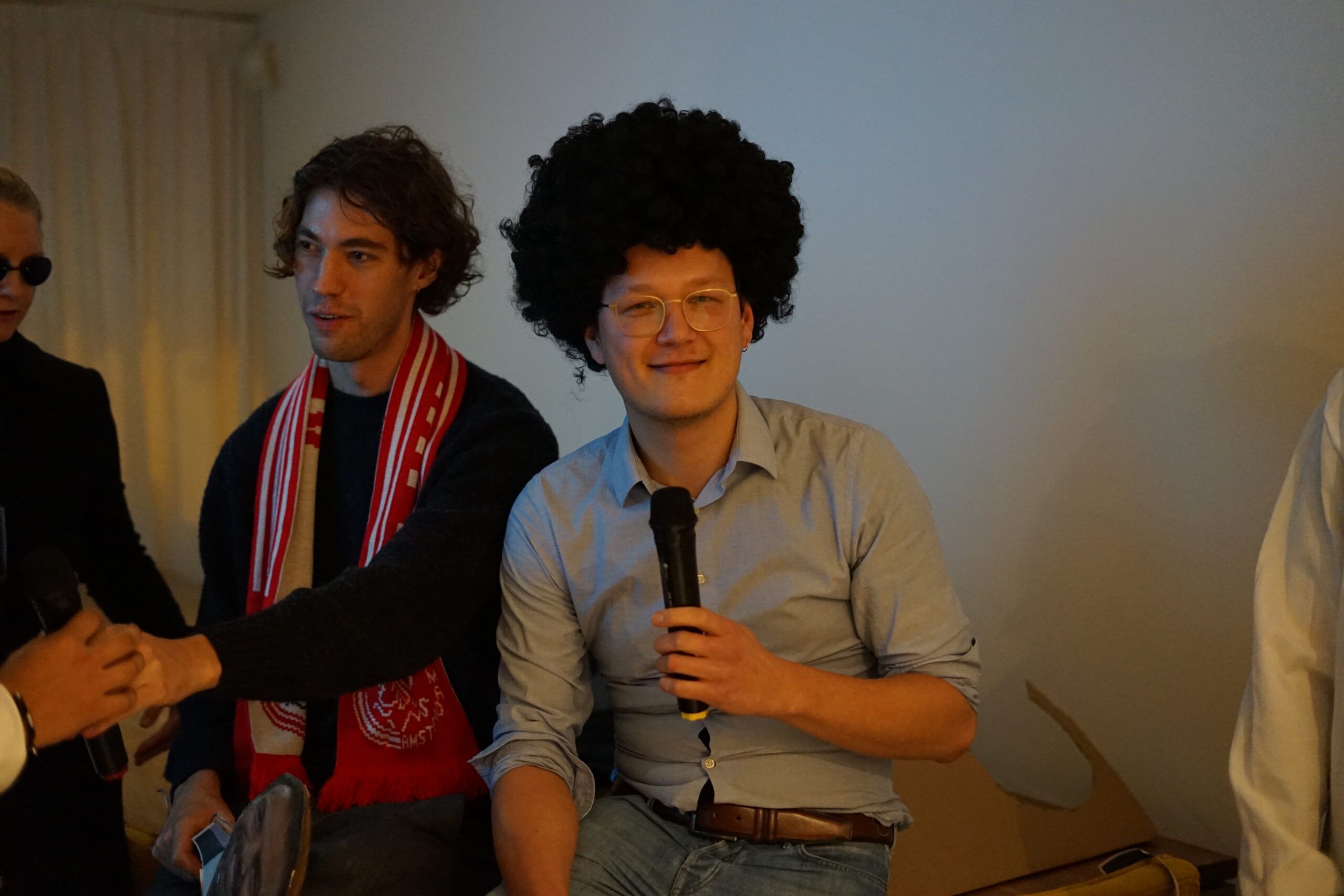
When Bob Oudejans joined Aurai (then known as Young Mavericks) in 2017, the company consisted of just eight people: seven trainees and the founder. Nearly a decade later, Bob remains the longest-serving employee at Aurai, having grown alongside the company from a small startup to part of the Xomnia family with over 130 employees.
His journey from fresh graduate to Lead Data Scientist offers a glimpse into both personal growth and the evolution of the data science field itself.
Bob's route to data science was anything but conventional. With a master's degree in neurobiology and a minor in Programming, he initially explored traditional academic paths. "I found it interesting, but it wasn't really my thing," he reflects.
The turning point came through a LinkedIn message from Lars, Aurai's founder, inviting him for a coffee. "Lars has this charisma," Bob recalls. "We met in an Amsterdam cafe and we just clicked." After two or three meetings, Bob received an offer to join the company's first Data Science traineeship.
The decision wasn't without risk. Data science programmes barely existed at universities, and the field was still emerging. But Bob took the leap, reasoning that if it didn't work out, he could always look for something else, which didn’t happen.
Bob’s first assignment didn’t go entirely as planned. After completing a two-month traineeship, he joined a client where the expectations were still somewhat open. “The agreements were less clearly defined than they are today,” he explains. “At that point, the scope of what we would be doing hadn’t been fully worked out yet.”
When that assignment ended after five months, Bob began accompanying founders Lars and Frank to client meetings. His technical perspective proved valuable in sales conversations, helping identify potential opportunities and pitfalls before projects even started. This led to a crucial decision: instead of searching for another billable assignment, Bob would split his time between client work and internal responsibilities.
"The company was growing, and I was growing," Bob says. "Every time I was ready for more responsibility, a new opportunity appeared." He became a mentor for incoming trainees, co-founded the company's party committee, and gradually took on more complex technical challenges.
The data science landscape has transformed dramatically since 2016. "There's much more focus on engineering now," Bob observes. "Machine learning engineering didn't really exist when I started." Initially, data scientists built models and conducted analyses, often without seeing their work reach production. Today, the emphasis has shifted toward implementation, maintenance, and integration with existing business processes, the domain of machine learning engineers.
Bob has embraced this evolution, gradually transitioning toward machine learning engineering while maintaining his data science foundation. "After all these years, I've mainly done the data science part," he says. "But I currently see more value in the business world for machine learning engineers,” he admits.
This transition happened organically through a combination of on-the-job learning and targeted courses. Over time, Bob built his expertise by working on a wide range of projects and gaining hands-on experience. "I'd rather show three projects I've delivered than a certificate," he laughs.
Two projects stand out in Bob's career: The first was at Centraal Boekhuis, the company responsible for distributing 95% of books printed in the Netherlands. Working alongside former Aurai colleagues who had been acquired by the company, Bob dove into the complex world of logistics. "I'd never really thought about logistics from a data perspective," he admits. "They have these conveyor belts with boxes being scanned by all sorts of machines. Super complex but fascinating!"
Bob pitched the idea of organising a hackathon focused on simulation models for new machinery. The resulting project reached management level and helped inform critical decisions about equipment investments. "It showed that if you demonstrate interest and are a bit assertive, you can make things happen," he reflects.
The second project was for Adomex, a B2B supplier of plants and garden products, during the COVID-19 pandemic. Working entirely remotely, Bob built a recommendation system for their webshop. The project was completed in just three months, went live successfully, and the client could directly measure its business impact.
"It proved you can deliver a successful product completely online," Bob says. "And it was one of those projects where everything came together: It went into production, people actually used it, and you could see the value it created."
After nine years, Bob remains at Aurai not because he hasn't had other opportunities, but because the company has consistently offered new challenges at the right time. "Every time I was ready for something new, that opportunity appeared here," he says. "It was almost always organic."
His current focus is on deepening his machine learning engineering expertise while continuing to mentor newer team members. But he's also embraced a broader perspective on career growth. "You don't always have to keep growing upward," he observes. "At some point, you can say: I'm in a good place, I can combine this well with my personal life, and that's a fine position to be in." With a young daughter at home, Bob appreciates the stability and flexibility his current role provides. "There's more to life than work," he admits.
His advice to others? "Keep learning, keep growing in breadth if not in height, and stay true to what you enjoy most about the work." For Bob, that's the technical challenge: solving complex problems and seeing real-world impact.
As Aurai continues to evolve within the larger Xomnia organisation, Bob remains confident about the future. "The informal culture, the trust, the focus on work-life balance, that's stayed consistent even as we've grown, and I'm confident it will continue."
No terms found for this post.