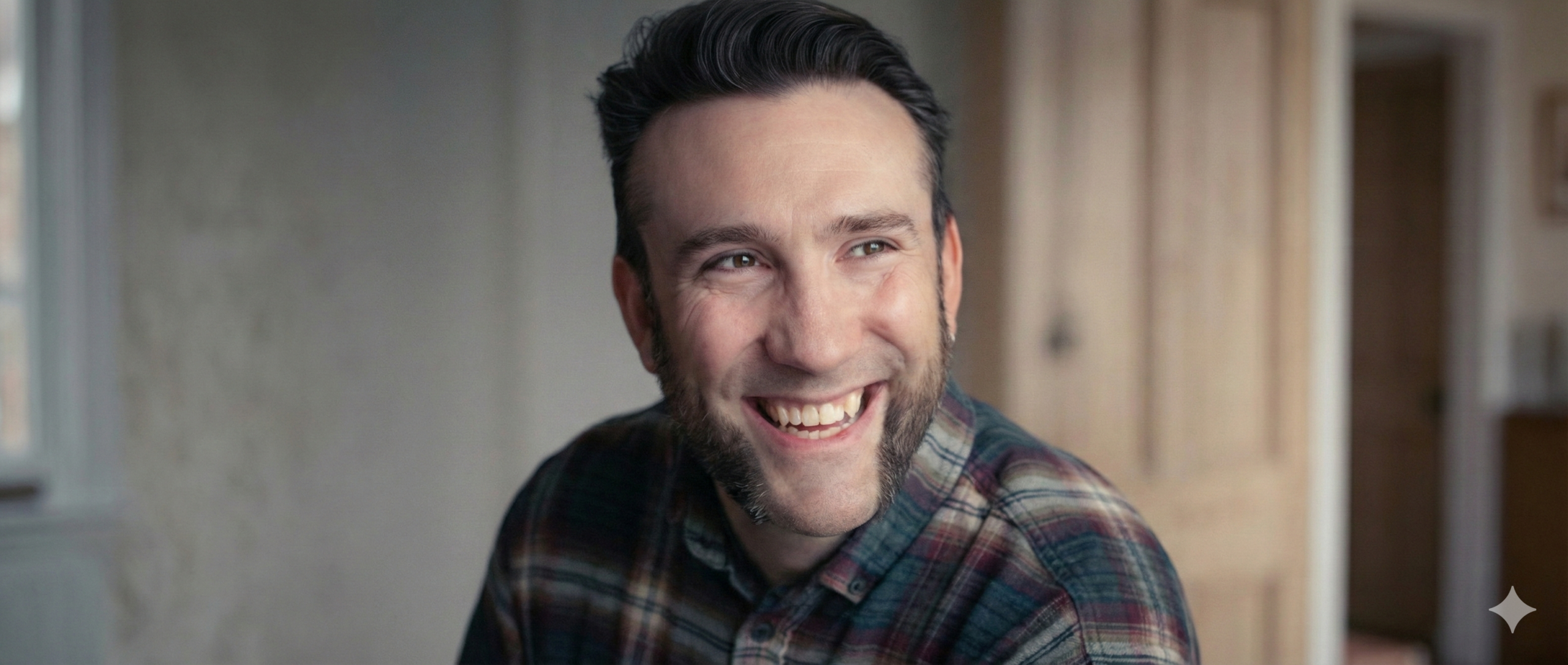
Marius Helf, now Principal Machine Learning Engineer at Xomnia, still remembers his first encounter with the company. It was early 2015 and he wasn’t visiting as a potential employee, he was there to teach. Working for his previous employer, he had come to train Xomnia’s first Data Scientists in RapidMiner.
The Xomnia building looked a little different from what it looks now: only the current first floor was used. On the ground floor, there was a modeling agency. The front door opened straight onto a staircase leading up: no choice but to climb. A few months later, Marius would make that climb again, this time as Xomnia’s newest team member.
Marius’ path to Xomnia wasn’t straightforward. After giving that first training session in early 2015, he moved to the United States for six months. During that time, he traveled through America and Cuba, exploring new places while his career plans took shape back in Europe. From Boston, Amsterdam and Dortmund, his home town, looked remarkably close on a map. It’s just like the commute between Boston and New York. But when he returned to Germany, the reality of moving abroad hit home.
Still, the decision wasn't difficult. Xomnia had stayed in his mind as “a nice little company”, and Amsterdam seemed like an interesting city to call home. He sent an email to Xomnia’s founders Ollie and William from across the Atlantic, had a few conversations, and signed his contract. In 2015, he officially joined Xomnia as Chief Data Scientist.
His first impression? “A little bit of chaos”, Marius laughs.
“We were seven employees, and everyone knew a little bit of everything,” Marius recalls. The company ran multiple trainee programs, with classes of four to eight people starting several times a year. Trainees would be trained at Xomnia, then placed at other companies, often leaving Xomnia after their education was complete.
Marius found himself working on three or four projects simultaneously. Some lasted just two weeks: a client would provide a dataset, Xomnia would analyze it, deliver a proof of concept, and move on. People worked four days at client sites and returned to the office on Fridays for training and team time.
“Everyone was responsible for everything, which meant either nothing got done or things got done twice,” he says. As Chief Data Scientist, he had to balance technical work with team responsibility, a difficult juggling act in those early days.
After a few years, he made a choice: management or technical work? For Marius, the answer was clear. He wanted to work with data, to solve problems, to build things. As Xomnia matured, so did his role. Projects became longer and more substantial. The chaos began to settle into something more structured.
One of his favorite memories is a business trip to the United States and Canada with Ritchie Vink, who would later become the founder of Polars. They traveled to train teams at a company with European subsidiaries, perhaps not the smartest decision from a pure business perspective, Marius admits, but incredibly valuable for understanding how different work cultures operate.
In those early years, Xomnia took what it could get. One colleague commuted to Belgium daily. The company was hungry and determined to grow. Today, Xomnia works primarily with Dutch clients and has the luxury of being more selective, a sign of how established the company has become.
For the past four years, Marius has worked with Enexis, a Dutch grid operator, on projects that sit at the heart of the energy transition. His work focuses on forecasting electricity load on transformers and other points in the grid, predicting how much power will flow through the network tomorrow, next week, or even five years from now.
“I love working with technical data,” Marius says. “Use cases about marketing or optimizing supermarket promotions are interesting, but for me, it's important that the work has a broader purpose, for society, for the world."
The project has evolved continuously over four years, adapting to new challenges. During the pandemic, consumption patterns shifted dramatically: people stayed home, factories closed, but solar panels kept generating power. Models that worked before suddenly didn’t. It's been a constant process of learning, refining, and improving.
Ten years ago, Marius arrived in Amsterdam in a new country. Today, he lives in Purmerend with his wife and young daughter. His priorities have shifted, as they do for many parents. The past two years have revolved around his daughter, her routines, her development, the small joys of watching her grow. “It’s hard to think beyond that world right now," he admits. "But being a father is truly the most beautiful thing to do.”
Through all the growth, talking about both Xomnia's and his own, one thing has remained constant: the feeling that he can be himself at work.
“At Xomnia, I’ve always felt I can be who I am, and everyone else can be who they are,” Marius says. “That hasn’t changed. The parties might be less frequent than in the early days, when we celebrated every Friday and sometimes Monday, Tuesday, and Thursday too, but the collegial atmosphere is still there. It still feels like a place where you don’t have to pretend to be someone else.” Marius quickly adds: “Luckily, the weekly Friday get-togethers always stayed!”
Looking ahead, Marius is eager to keep learning. There’s always more to discover on the technical side, and he’s particularly interested in continuing his work in the utilities sector. But he’s also thinking about how to share his experience with Xomnia’s growing team, how to have impact not just as an individual contributor, but as someone who can help others grow.
From sleeping at the office in 2015 to forecasting the future of the Dutch energy grid, Marius’ journey has been anything but ordinary. He has seen Xomnia grow from seven people to a thriving consultancy, navigated the shift from two-week sprints to multi-year projects and found his place in work that genuinely matters.
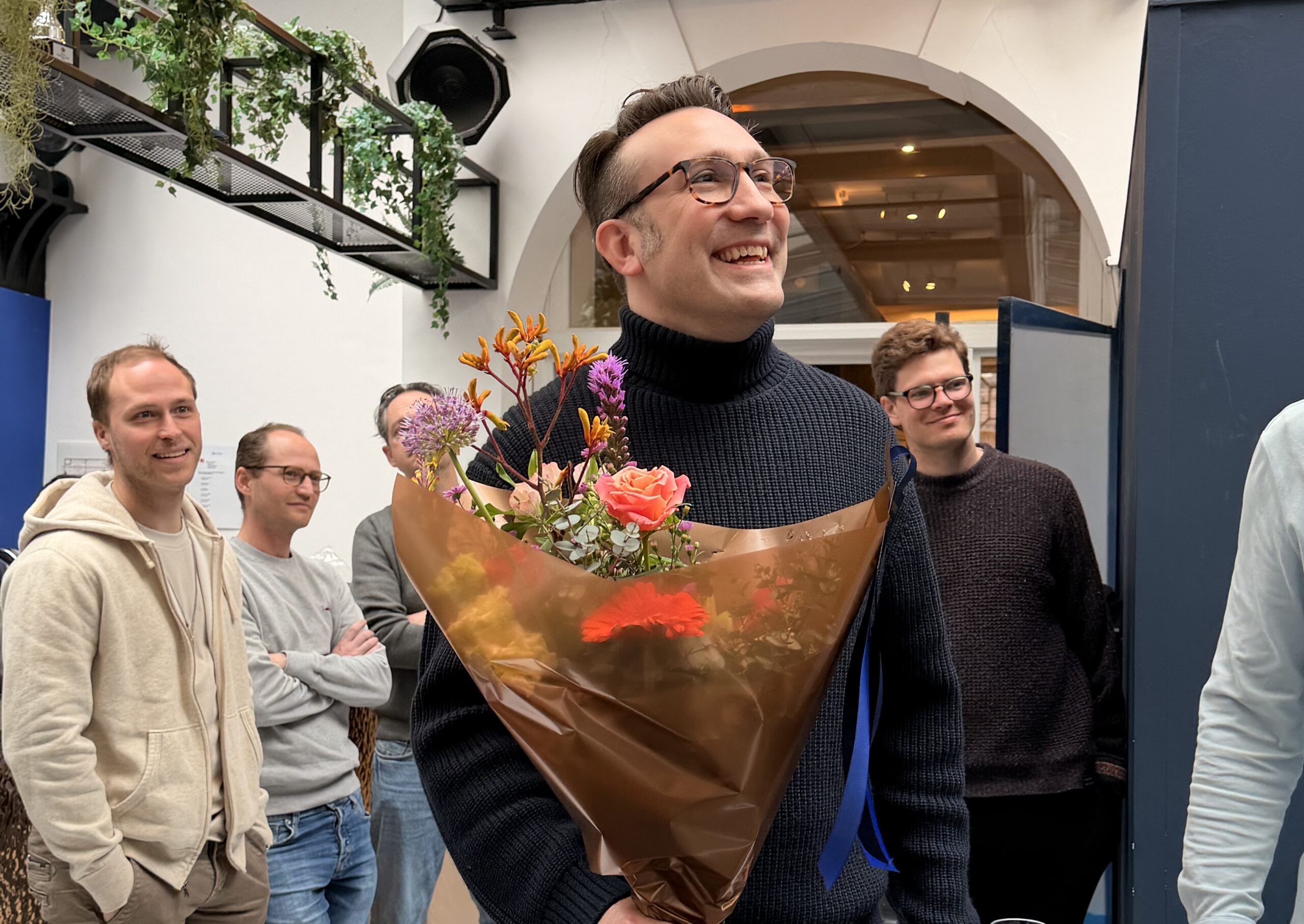
As we celebrate his tenth anniversary, we’re grateful for his technical expertise, his commitment to meaningful work, and his authentic presence in our team. Here’s to Marius and to whatever the next ten years bring.
No terms found for this post.